


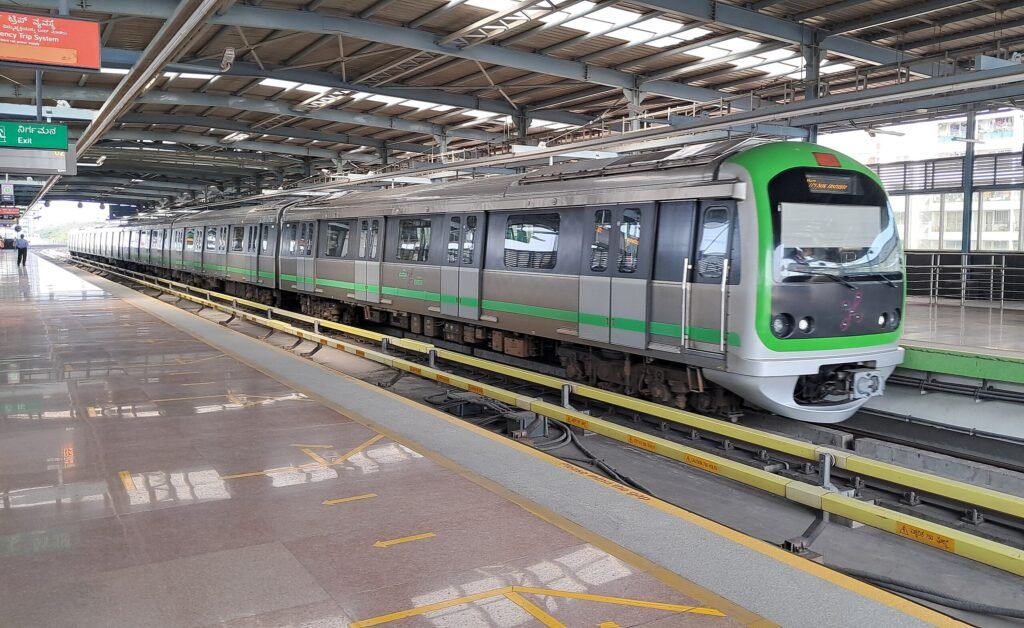
STN: Karnataka Deputy Chief Minister D. K. Shivakumar has confirmed that 175 km of the Bangalore Metro network will be operational by December 2027. He shared this update after a review meeting with officials of the Bangalore Metro Rail Corporation Limited (BMRCL). He also oversees Bengaluru Development and spoke about the pace at which the city is pushing metro expansion.
At present, the city has 96 km of metro lines in use. Shivakumar said the government is moving fast to expand the network. He added that more metro lines will help reduce traffic and offer a reliable travel option to daily commuters.
He pointed to the new Yellow Line as an example. The 24-km line opened after the current government took charge. It now sees close to one lakh passengers every day. Police reports show that traffic on nearby roads has dropped by almost 30 per cent since the line became active.
Bangalore Metro Expansion Plan for 2026 and 2027
Shivakumar outlined the roadmap for the next two years.
He said the government will bring 41 km of new metro lines into service in 2026.
By December 2027, another 38 km will start operations, including the Airport Line.
Once these lines become functional, the total length of Bangalore Metro will reach 175 km.
Bangalore Metro: New Corridors Under Planning
The Deputy CM also said new routes are in the planning stage. These include lines to Tavarekere, Hosakote, Bidadi, and Nelamangala. Detailed Project Reports (DPRs) are under preparation. He said these extensions will support the city’s growth and give more areas direct metro access.
Bangalore Metro Phase 3: 100 km with Double-Decker Corridors
Shivakumar said the government will issue tenders next month for around 100 km of metro lines under Phase 3. Most of this phase will be developed as double-decker corridors. These structures will have an elevated road on the lower deck and metro tracks on the upper deck.
He said the decision was taken to ease traffic in busy stretches. The Magadi Road corridor has also been shifted to a double-decker model because of heavy vehicle movement from western Karnataka.
The government has also told BMRCL to support commercial spaces around metro stations. This may include shops, offices, and parking areas. Shivakumar said the aim is to make stations more useful and improve revenue for operations.
Funding and Cost Structure
The estimated cost of Phase 3 is ₹25,311 crore.
Out of this, ₹15,600 crore will come from the Japan International Cooperation Agency (JICA).
Tenders worth ₹9,700 crore will be issued in January.
Shivakumar addressed concerns that some project bids exceeded earlier cost estimates. He said private firms leading the projects will handle most of the financial risk. The government will reimburse only 40 per cent of the estimated cost. He also noted that metro construction costs in cities like Mumbai have reached ₹1,200 crore per km.
Experts in the sector say the city’s approach is practical. Mamta Shah, MD and CEO of Urban Infra Group, said the use of double-decker corridors is a response to land limits and traffic load. She added that such designs are complex but help cities expand transit without disturbing existing roads.
With many lines set for completion in the next two years and Phase 3 tenders about to begin, Bengaluru is preparing for a major shift in public transport. But experts say the city must maintain project speed, coordination, and cost control to meet the 175-km target on time.
FAQ: Bangalore Metro Expansion
A: Yes. The Airport Line will connect the city to Kempegowda International Airport with a direct link to the terminal area.
A: The estimated travel time between the city and the airport is expected to be around 45–50 minutes, depending on the final station stops.
A: Most Phase 3 lines are planned as elevated or double-decker corridors. Only a few short stretches may go underground if required.
A: BMRCL estimates that daily ridership may cross 12–15 lakh once the 175-km network becomes operational.
A: There is no official announcement on fare hikes. BMRCL generally reviews fares based on operational and maintenance needs.
A: Shops and office spaces near metro stations can generate revenue, reduce the financial burden on the government, and make stations more active and accessible.
A: Officials have not confirmed this yet, but successful execution of Phase 3 may lead to more such structures in future phases.